Compare the vendors behind the claims
Use live pricing, lab results, and community reviews to evaluate peptide vendors before you click out.
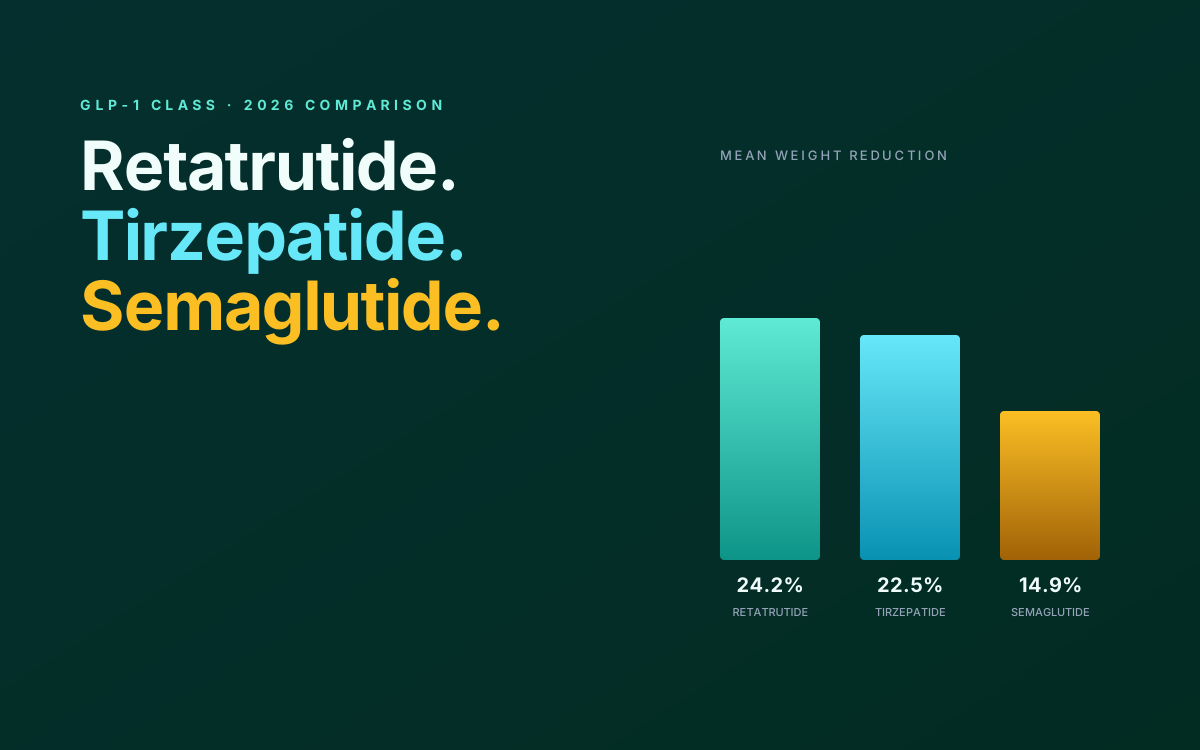
The headline number first: in head-to-head Phase 2/3 trials, retatrutide produced 24.2% mean body weight reduction at 48 weeks, tirzepatide 22.5% at 72 weeks, and semaglutide 14.9% at 68 weeks. Same drug class, three different receptor profiles, and a real 10-percentage-point gap between the leader and the laggard.
Of the three, only semaglutide and tirzepatide are FDA-approved for weight management as of April 2026. Retatrutide is in Phase 3 (TRIUMPH) with filing expected in 2026–2027. That approval-status gap matters more than most blogs admit, because the retatrutide that circulates in the research-peptide market is not what was used in Lilly's trials. We get into that below.
This guide covers the three compounds you actually have to choose between in 2026, what the published data says, how they differ on side effects and dosing, and what the sourcing reality looks like. For broader context, our evidence-based peptide tier list puts the GLP-1 class in context against the rest of the field.
The 30-second comparison matrix
| Semaglutide | Tirzepatide | Retatrutide | |
|---|---|---|---|
| Receptor targets | GLP-1 | GIP + GLP-1 | GIP + GLP-1 + glucagon |
| FDA status (obesity) | Approved (Wegovy) | Approved (Zepbound) | Phase 3 |
| Mean weight loss in trial | 14.9% (STEP 1) | 22.5% (SURMOUNT-1, 15 mg) | 24.2% (Phase 2, 12 mg) |
| Trial duration | 68 weeks | 72 weeks | 48 weeks |
| Half-life | ~7 days | ~5 days | ~6 days |
| Dosing | Weekly subcutaneous | Weekly subcutaneous | Weekly subcutaneous |
| CV outcomes data | Yes (SELECT) | In progress (SURPASS-CVOT) | Not yet |
| Approval year | 2021 | 2023 | TBD |
A few of those rows do real work. Receptor profile predicts side-effect intensity. Trial duration is non-trivial when you compare percentages. CV outcomes data is the difference between "FDA-approved drug" and "drug with multiple decades of safety reassurance."
Semaglutide: the most-replicated weight-loss drug in modern medicine
Semaglutide is a GLP-1 receptor agonist developed by Novo Nordisk. Approved as Ozempic for type 2 diabetes in 2017 and as Wegovy for obesity in 2021. The pivotal Wegovy trial — STEP 1 — randomized 1,961 adults with overweight or obesity to weekly 2.4 mg semaglutide or placebo for 68 weeks. Semaglutide produced 14.9% mean weight reduction versus 2.4% on placebo. Roughly half of the active arm lost 15% or more of body weight.
The 2023 SELECT trial extended the case from weight to cardiovascular outcomes: in 17,604 patients with established cardiovascular disease and overweight or obesity (without diabetes), semaglutide reduced major adverse cardiovascular events by 20% over a median 39.8 months. That is a hard-outcome, not a surrogate, and it is the strongest evidence in the GLP-1 class for benefits beyond weight loss.
Where semaglutide loses ground in 2026 is on raw efficacy. Tirzepatide and retatrutide both produce more weight loss in head-to-head and indirect comparisons. Semaglutide remains the most prescribed because of supply, prescriber familiarity, and the longest replicated safety record.
Side-effect profile. GI-dominant: nausea (44% in STEP 1 vs 16% placebo), diarrhea (32% vs 16%), vomiting, constipation. Most are dose-dependent and front-loaded in the first 8–12 weeks of titration. Roughly 7% of trial participants discontinued for GI side effects.
Tirzepatide: the dual agonist that took the lead
Tirzepatide is Eli Lilly's dual GIP/GLP-1 agonist. Approved as Mounjaro (T2D, 2022) and Zepbound (obesity, 2023). The pivotal SURMOUNT-1 trial randomized 2,539 adults with obesity to 5, 10, or 15 mg tirzepatide or placebo for 72 weeks. The 15 mg dose produced 22.5% mean weight reduction versus 3.1% on placebo. Roughly 57% of patients in the 15 mg arm achieved ≥20% weight loss.
The mechanism story matters. GIP (glucose-dependent insulinotropic polypeptide) was historically considered a metabolic dead end — until Lilly's preclinical work showed that combining GIP and GLP-1 receptor activation produced more weight loss than either alone. Tirzepatide is the validation of that thesis.
The cardiovascular outcomes data is in progress (SURPASS-CVOT, expected readout 2024–2025 with full publication later). Until that lands, semaglutide retains the harder evidence base for non-weight-loss benefits, even though tirzepatide wins on weight loss alone.
Side-effect profile. Similar pattern to semaglutide but with a slightly higher absolute incidence of nausea and diarrhea at peak dose. Discontinuation for adverse events was 6.2% across the active arms in SURMOUNT-1.
Retatrutide: the triple agonist with the biggest number on the page
Retatrutide adds a glucagon receptor agonist arm to the GIP/GLP-1 backbone. The Phase 2 trial (Jastreboff et al., NEJM 2023) randomized 338 adults with obesity to 1, 4, 8, 12 mg retatrutide or placebo for 48 weeks. The 12 mg arm produced 24.2% mean weight reduction. The slope of weight loss had not plateaued at week 48 — meaning the headline 24.2% number is an undercount of what longer dosing would produce.
The glucagon receptor arm is the differentiator. Glucagon raises hepatic glucose output and energy expenditure. Net effect: more total fat loss than dual-agonist mechanism alone, with a hint of preferential visceral-fat reduction in the imaging substudy.
Phase 3 (TRIUMPH) is in progress. FDA filing is expected in late 2026 or early 2027, with possible approval in 2027–2028.
The catch. Retatrutide is not yet on the market. What circulates in the research-peptide channel is reconstructed from published structure-activity descriptions, not Lilly's commercial product. That means: variable purity, no published lot-level COAs from anyone authoritative, and zero supply-chain reassurance. Sourcing risk on retatrutide today is structurally higher than for the two approved compounds. Our vendor red flags guide covers what to look for if you are evaluating sources.
Side-effect profile. Phase 2 reported nausea at 40–55% across the higher doses, vomiting at 20–30%, and a slightly higher rate of cardiovascular adverse events (notably increased heart rate, +6 bpm at 12 mg) than the dual agonist. Whether the cardiovascular signal persists in Phase 3 is the major open question.
Which one should you pick
Three honest framings:
If you want the most replicated drug with the strongest non-weight-loss outcomes data: semaglutide. Lower peak efficacy, but the SELECT cardiovascular data is unique in the class. This is the conservative choice and the one most clinical guidelines currently default to.
If you want the most weight loss from an FDA-approved compound: tirzepatide. Real-world efficacy in 2026 looks closer to the SURMOUNT trial numbers than semaglutide's STEP numbers. Cardiovascular outcomes data is pending but the approved label is comprehensive.
If you are tracking the field and willing to wait: retatrutide. Phase 2 produced the biggest weight-loss number ever recorded for a metabolic drug in a controlled trial. Phase 3 readout is the milestone to watch. Sourcing the compound today is structurally risky in a way the other two are not.
A useful follow-up: our vendor red flags guide covers the seven specific patterns that mean a GLP-1 vendor is about to scam you, and our vendor directory tracks third-party COA history on the GLP-1 listings specifically.
Sourcing reality in 2026
Approval status changes how the supply chain works. Three different stories.
Semaglutide. Brand-name supply (Wegovy, Ozempic) has stabilized after the 2022–2023 shortages. Compounded semaglutide from 503A and 503B pharmacies surged during the FDA's official shortage declaration; that declaration was rescinded in 2024 and again in 2025, narrowing the legal compounding window. Research-grade peptide from non-pharmacy vendors exists in a regulatory gray zone — legal to sell as "for research use only," not legal to sell for human consumption. The most active discussion of vendor quality lives in our research forum.
Tirzepatide. Same approved-drug logic. Lilly's brand supply has expanded; compounded supply has contracted. Research-grade vendors exist. Counterfeit risk is meaningfully higher than for semaglutide because demand is higher and price is higher.
Retatrutide. No approved supply. Every research vendor selling "retatrutide" is selling something assembled from published structural data. Some of those vendors do real third-party testing; most do not. The single most-counterfeited, lowest-confidence compound on this list. If you decide to research it, vendor selection is more important than the molecule. Our vendor scoring methodology ranks current sources by COA quality and lot-level reproducibility.
What this means for researchers
The receptor profile is the easiest mental model. Single-target (semaglutide) gets you to ~15% weight reduction with the strongest non-weight-loss outcomes data. Dual-target (tirzepatide) adds GIP and gets you to ~22% with solid approval-grade evidence. Triple-target (retatrutide) adds glucagon and gets you to ~24% with no approval and a higher cardiovascular signal that needs Phase 3 to resolve.
Pick by what kind of evidence you trust. If you want hard cardiovascular outcomes, semaglutide. If you want maximum approved-drug efficacy, tirzepatide. If you are a researcher tracking the leading edge and aware of the sourcing tradeoffs, retatrutide is the one to watch.
For the broader category context — where GLP-1s sit relative to other peptide classes — see our 2026 peptide tier list. For sourcing-side risks, the vendor red flags guide is the next read.
Frequently asked questions
- Is retatrutide approved by the FDA?
Not as of April 2026. Retatrutide is in Phase 3 (the TRIUMPH program); Eli Lilly is expected to file with the FDA in late 2026 or early 2027, with possible approval in 2027–2028. Every retatrutide vial currently on the research-peptide market is reconstructed from published structure data, not from Lilly's commercial product.
- Which is more effective: tirzepatide or semaglutide?
Tirzepatide produces more weight loss. SURMOUNT-1 reported 22.5% mean body weight reduction at the 15 mg dose over 72 weeks. Semaglutide's STEP 1 trial reported 14.9% at 2.4 mg over 68 weeks. Semaglutide retains the stronger non-weight-loss outcomes data — the SELECT cardiovascular trial (2023) is unique in the class.
- Why does retatrutide produce more weight loss than tirzepatide?
Retatrutide adds a glucagon receptor agonist arm to the GIP and GLP-1 receptor activation that tirzepatide already provides. Glucagon increases hepatic glucose output and energy expenditure, which combined with the appetite-suppression and satiety effects of GIP/GLP-1 produces additional fat loss. The NEJM Phase 2 trial reported 24.2% mean weight reduction at 48 weeks at the 12 mg dose.
- Are these drugs the same as Ozempic, Mounjaro, Wegovy, and Zepbound?
Yes — those are brand names. Semaglutide is sold as Ozempic (type 2 diabetes) and Wegovy (obesity). Tirzepatide is sold as Mounjaro (T2D) and Zepbound (obesity). Retatrutide does not have a brand name yet because it is not approved.
- What are the main side effects of GLP-1 weight-loss drugs?
All three are GI-dominant: nausea, diarrhea, vomiting, and constipation, mostly in the first 8–12 weeks of dose titration. STEP 1 (semaglutide) reported 7% discontinuation for GI side effects. Retatrutide Phase 2 also showed a slightly elevated heart rate at the 12 mg dose (+6 bpm) — whether that signal persists in Phase 3 is the major open safety question.
Sources
- Wilding et al. — Once-Weekly Semaglutide in Adults with Overweight or Obesity (STEP 1, NEJM 2021)
- Jastreboff et al. — Tirzepatide Once Weekly for the Treatment of Obesity (SURMOUNT-1, NEJM 2022)
- Jastreboff et al. — Triple-Hormone-Receptor Agonist Retatrutide for Obesity (Phase 2, NEJM 2023)
- Lincoff et al. — Semaglutide and Cardiovascular Outcomes in Obesity without Diabetes (SELECT, NEJM 2023)
- FDA — Wegovy prescribing information
- FDA — Zepbound prescribing information
- Eli Lilly — Retatrutide TRIUMPH Phase 3 program overview
Save vendors and track price drops
Create a free account to save your shortlist and get alerts when new prices or lab tests are added.