Compare the vendors behind the claims
Use live pricing, lab results, and community reviews to evaluate peptide vendors before you click out.
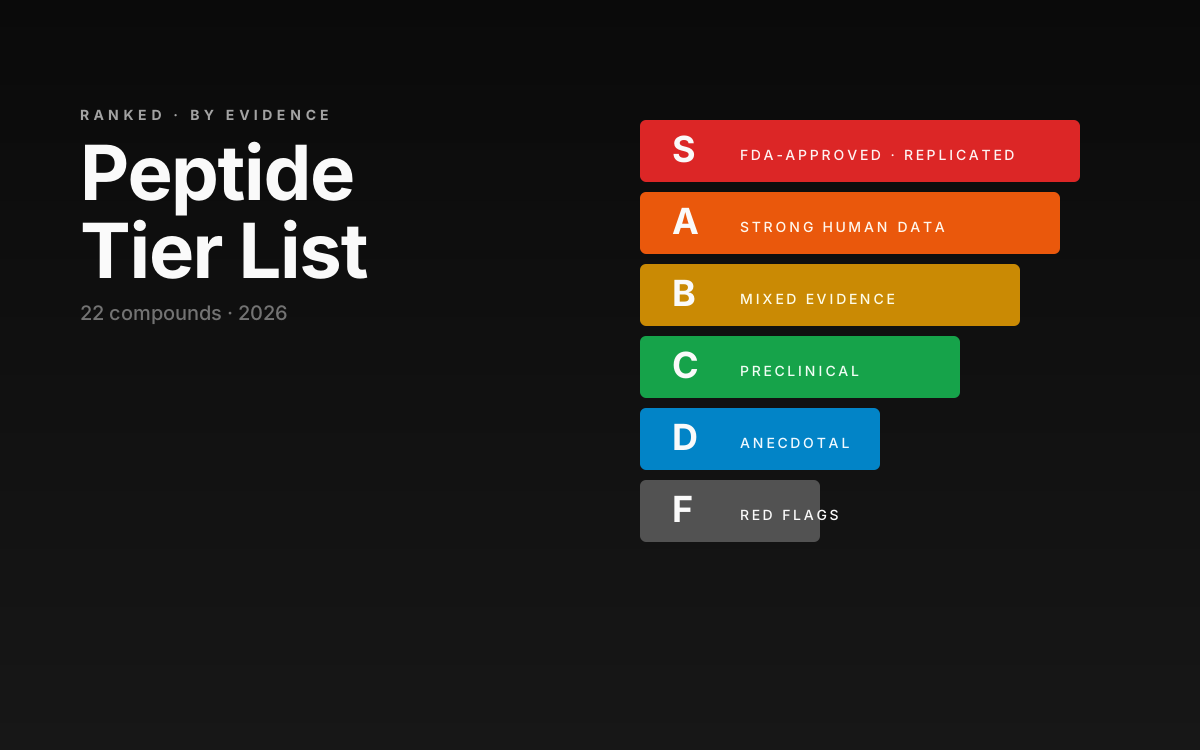
A peptide tier list ranks compounds by evidence quality — randomized trial count, FDA-approval status, and independent replication — not by community enthusiasm. This list grades 22 of the most-discussed peptides on that single scale. S-tier is FDA-approved and replicated. F-tier is documented safety signals. Below: the full ranking with one paragraph of evidence per compound.
Most peptide rankings online are written by people selling peptides. This one is not. We graded 22 of the most-discussed compounds on a single axis: how strong is the human evidence, right now, in April 2026.
Tiers are based on three signals: (1) FDA-approval status, (2) number of randomized human trials, and (3) whether independent groups have replicated the headline findings. Animal data is interesting but it does not move a peptide above C-tier. Anecdotes do not count.
This list is research-only. Nothing here is a recommendation to consume, inject, or otherwise self-administer any compound. If you are sourcing for research, our vendor directory tracks third-party COA history.
How the tiers work
| Tier | Threshold |
|---|---|
| S | FDA-approved for at least one indication, multiple Phase 3 RCTs |
| A | Strong human data; either approved abroad or in late-stage US trials |
| B | Mixed human + animal data, replicated mechanism, no FDA approval |
| C | Mostly preclinical, some human pilot data, unreplicated |
| D | Animal-only data with optimistic anecdotes |
| F | Real safety signals, withdrawn from trials, or fundamentally misrepresented |
Below each entry: the evidence in one paragraph, the realistic use case, and where the discussion is happening.
S-Tier — Approved, replicated, real
Tesamorelin
A growth-hormone-releasing hormone analog approved by the FDA in 2010 for HIV-associated lipodystrophy. The Phase 3 trials reported a roughly 18% reduction in visceral adipose tissue versus placebo over 26 weeks. It is the only GHRH-class compound with a full FDA label, and the visceral-fat finding has been replicated in non-HIV cohorts of older men. Off-label interest centers on visceral-fat reduction in middle-aged men. Discussed extensively in our research forum.
Semaglutide
A GLP-1 receptor agonist approved as Ozempic (T2D) and Wegovy (obesity). The STEP trials showed roughly 15% mean body weight reduction at 68 weeks. Cardiovascular outcomes are favorable in SELECT (2023). The single most-replicated peptide-class drug in modern medicine. The supply situation, sourcing tradeoffs, and dosing realities are covered in our GLP-1 comparison guide.
Tirzepatide
A dual GIP/GLP-1 agonist approved as Mounjaro (T2D) and Zepbound (obesity). SURMOUNT-1 reported up to 22.5% mean weight reduction at 72 weeks at the 15 mg dose — the largest weight-loss effect of any approved drug to date. Long-acting, weekly subcutaneous. Supplants semaglutide in head-to-head efficacy. Sourcing notes and counterfeit risk in our vendor red flags guide.
A-Tier — Strong evidence, almost approved
Retatrutide
A triple agonist (GIP, GLP-1, glucagon) from Eli Lilly. The Phase 2 readout in NEJM (2023) reported 24.2% mean body weight reduction at 48 weeks at the 12 mg dose. Phase 3 (TRIUMPH) is ongoing through 2026 with FDA filing expected in late 2026 or 2027. The biggest fat-loss number any peptide has produced in a controlled trial. The catch: it is not yet approved, and what circulates in the research-peptide market is not what was used in the trial. Compare it to the rest of the GLP-1 class in our GLP-1 deep dive.
Sermorelin
A 29-amino-acid GHRH fragment. FDA-approved as Geref in 1990 for pediatric GH deficiency before being voluntarily withdrawn in 2008 for commercial reasons (not safety). Multiple controlled trials in adults show GH and IGF-1 elevation. Less potent than tesamorelin but a longer human safety record. The "starter GHRH" of the field.
Ipamorelin + CJC-1295 (the GH stack)
Ipamorelin is a selective GH secretagogue with no measurable cortisol or prolactin effect (the differentiator from older compounds like GHRP-6). CJC-1295 (without DAC) is a GHRH analog with a roughly 30-minute half-life. Combined, they produce pulsatile GH release that mimics endogenous patterns. Multiple small human pharmacokinetic studies confirm the GH spike. No long-term outcome trials. Most-discussed sleep and recovery stack in the r/Peptides subreddit.
B-Tier — Promising mechanism, weak human data
BPC-157
The most-discussed non-GLP-1 peptide on Reddit, by a wide margin. The case for B-tier: a 2019 systematic review by Sikiric and colleagues catalogs 47 animal studies showing accelerated tendon, ligament, and muscle healing at 10–500 µg/kg, with a plausible mechanism via VEGF and nitric oxide signaling. The case against higher tier: zero published human RCTs as of April 2026. Oral bioavailability in humans is unknown despite aggressive marketing of capsules. If you are looking for it, BPC-157 is the single most counterfeited research peptide on the market — vendor selection matters more here than for any other compound on this list.
GHK-Cu
A copper tripeptide isolated from human plasma. Strong in vitro work on fibroblast proliferation, collagen synthesis, and hair-follicle stimulation. A 2018 review by Pickart and Margolina summarizes the case for skin and tissue regeneration. Two small human studies on topical application show measurable wrinkle reduction. Injectable form is research-only.
MK-677 (Ibutamoren)
Technically not a peptide — it is a non-peptide ghrelin receptor agonist — but it is sold and discussed as one. Nass and colleagues (2008, J Clin Endocrinol Metab) showed two months of MK-677 increased fat-free mass in healthy older adults by ~1.1 kg versus placebo. Oral, daily, single compound. The trade-off is a real increase in appetite and water retention.
MOTS-c
A mitochondrial-derived peptide. A handful of human pilot studies suggest improved insulin sensitivity and exercise capacity. Mechanism is genuinely novel. Evidence base is thin enough to keep it B-tier rather than A-tier, but trajectory is upward.
C-Tier — Mostly animal data
TB-500 (synthetic Thymosin Beta-4)
Almost always discussed alongside BPC-157. Animal data in cardiac and dermal injury models is strong. No published human RCTs in injury healing. The community pairs it with BPC-157 because the mechanisms are complementary on paper, not because there is human evidence either compound works alone. Stacking guidance is heavily anecdotal.
Epithalon (Epitalon)
A four-amino-acid peptide developed in the Soviet pineal-gland research program of the 1980s. Khavinson and colleagues report telomerase activation and lifespan extension in mice and a small set of human trials in elderly cohorts. The data is real but exclusively from one research group, and replication outside Russia is essentially nonexistent. Cheap, short cycle protocol, plausible mechanism — but C-tier until someone independent confirms the headline numbers.
Selank and Semax
Two short neuropeptides from the same Russian research program. Selank is anxiolytic; Semax targets BDNF and NGF expression for cognitive enhancement. Both have Russian regulatory approval (Selank as an anxiolytic) but minimal Western replication. Promising mechanism for stress-resilience and cognition; the evidence base just has not crossed into the English-language literature in any meaningful volume.
Thymosin Alpha-1
Approved in over 30 countries (not the US) for hepatitis B and as an immune modulator in cancer adjuvant therapy. Real human data exists, but the indications are narrow and the off-label "immune optimization" use case in healthy adults has no controlled support.
D-Tier — Animal data and vibes
SS-31 (Elamipretide)
A mitochondria-targeted peptide. Phase 3 trials (MMPOWER-3 in mitochondrial myopathy) failed to meet primary endpoint in 2019. Subsequent interest has shifted to age-related disease, but the lead clinical program for the most evidence-driven indication did not pan out. Mechanism is interesting; the actual outcome data is disappointing.
DSIP (Delta Sleep-Inducing Peptide)
Discovered in 1977. Five decades of follow-up research has not produced a replicable sleep effect in controlled human trials. The original mechanism story is still being investigated. As a research tool: fine. As a sleep aid: the evidence is not there.
Thymalin and other thymic peptides (excluding Thymosin Alpha-1)
Cluster of compounds with overlapping mechanism claims and almost entirely Soviet-era data. Difficult to evaluate independently.
F-Tier — Red flags
Melanotan-2 (MT-2)
Real safety signals. Multiple case reports in dermatology journals link MT-2 use to changes in nevi, melanoma, and melanocytic atypia. The compound was abandoned by the original Arizona research group decades ago. Sold widely anyway. Avoid.
GHRP-6
A first-generation GH secretagogue superseded by ipamorelin specifically because GHRP-6 raises cortisol, prolactin, and appetite to a degree that wipes out most of the benefit of the GH pulse. There is no reason to use GHRP-6 in 2026 when ipamorelin exists. F-tier on obsolescence grounds.
"Proprietary blends" sold as peptides
If a product page does not name the specific peptide, the dose per vial, and the lot-specific certificate of analysis, it does not belong in your research stack. The most common scam pattern in 2026 is repackaged amino-acid powder sold under invented "peptide blend" names. We cover this and other scam patterns in detail in our vendor red flags guide.
What this means for researchers
A few patterns fall out of the rankings.
The GLP-1 class is in a category of its own. Three compounds in S/A tier (semaglutide, tirzepatide, retatrutide) all targeting overlapping receptors. If your research interest is metabolic, the published evidence overwhelms anything in the recovery or longevity category. The head-to-head comparison is worth reading before sourcing decisions.
BPC-157 is overrated relative to its evidence and underrated relative to its risk-of-counterfeit. It is genuinely the most-discussed compound after GLP-1s, the animal data is strong, and there are zero human RCTs. That gap is the whole story. If you are doing personal research, the vendor matters more than the molecule — see our vendor scoring methodology.
The Russian-origin peptide cluster (epithalon, selank, semax, thymalin) sits in C-tier together. Real data exists; replication outside the original research programs does not. That may change. It has not yet.
Most peptides marketed for "anti-aging" sit in D-tier or below. SS-31's clinical program failure is a useful reminder that an interesting mechanism does not mean a working drug.
If you want to follow specific compounds as new evidence comes in, our research forum tracks new PubMed entries weekly, and we update this list as the data moves.
Frequently asked questions
- What is a peptide tier list?
A peptide tier list ranks compounds on a single scale based on evidence quality: FDA-approval status, randomized human trial count, and independent replication. The top tier (S) holds approved drugs like semaglutide, tirzepatide, and tesamorelin. The bottom tier (F) holds compounds with documented safety signals like Melanotan-2. Animal data alone does not move a peptide above C-tier.
- What is the strongest peptide for fat loss in 2026?
Retatrutide produced 24.2% mean weight loss at 48 weeks in the NEJM Phase 2 trial (12 mg dose) — the largest weight-loss number any peptide-class drug has produced in a controlled trial. Tirzepatide is the strongest FDA-approved option, with 22.5% mean weight loss in SURMOUNT-1. See our GLP-1 comparison guide for the head-to-head.
- Is BPC-157 backed by human evidence?
Not yet. The 2019 Sikiric systematic review catalogs 47 animal studies showing accelerated tendon, ligament, and gut healing, but as of April 2026 there are zero published human RCTs. BPC-157 sits in B-tier on this list because the mechanism is reproducible in animals; it does not move to A-tier without human trials.
- Why is Melanotan II in F-tier?
Multiple case reports in dermatology journals link Melanotan II use to changes in nevi, melanocytic atypia, and melanoma in young patients. The original Arizona research group abandoned the compound decades ago, and the FDA has issued direct consumer warnings. There is no controlled human-trial support at the doses sold on the research-peptide market.
- How often is this peptide tier list updated?
We refresh rankings whenever a meaningful new RCT publishes, an FDA decision lands, or a safety signal emerges. The current version reflects evidence through April 2026. The most recent change moved retatrutide from B to A on the strength of the NEJM Phase 2 readout.
Sources
- FDA — Tesamorelin (Egrifta) approval
- Wegovy (semaglutide) FDA prescribing information
- Mounjaro (tirzepatide) FDA prescribing information
- Jastreboff et al. — Triple-hormone-receptor agonist retatrutide for obesity (NEJM, 2023)
- Sikiric et al. — BPC-157 systematic review of preclinical work
- Khavinson et al. — Epitalon and pineal-gland peptide regulation
- Pickart & Margolina — GHK-Cu skin and tissue regeneration review
- Nass et al. — MK-677 (ibutamoren) two-month trial in older adults
Save vendors and track price drops
Create a free account to save your shortlist and get alerts when new prices or lab tests are added.