28 Day Rule for Labs: Bacteriostatic Water Storage, Safety & Vendors
28 Day Rule for Labs: Bacteriostatic Water Storage, Safety & Vendors

An unopened vial of bacteriostatic water is good until the manufacturer’s printed expiration date, typically several years from production. Once you puncture the stopper, the common practice is to use it within 28 days, unless the manufacturer specifies otherwise, and only when it has been stored at USP controlled room temperature away from direct light. Benzyl alcohol keeps bacteria from multiplying, but it does not sterilize the solution.
TL;DR:
- Once punctured, a vial of bacteriostatic water should be used within 28 days unless manufacturer instructions specify otherwise, and storage conditions must be maintained.
- Benzyl alcohol slows bacterial growth but does not sterilize the solution, so contamination from repeated punctures or improper handling can still pose risks.
- The shelf life of unopened vials is typically two to three years, but once opened, a 28-day usage window applies, which must not exceed the original expiration date.
- Signs of degradation include cloudiness, particulates, discoloration, or unusual odors, but microbial contamination can occur even with a clear appearance.
- For safety, do not use preservative-containing bacteriostatic water in neonates or during pregnancy, due to benzyl alcohol toxicity risks like “gasping syndrome” in newborns.
Table of Contents
- What bacteriostatic water is and how benzyl alcohol preserves it
- Shelf life timelines: unopened versus opened vials
- How bacteriostatic water degrades and signs it may be unsafe
- Proper storage and aseptic handling to maximize shelf life
- Safety considerations for neonates, infants, and pregnancy
- If you used old or expired bacteriostatic water
- Why independent lab testing matters when sourcing diluents
- What conservative handling actually looks like
- Checking vendor quality before you buy diluents or peptides
- FAQ
- Sources
What bacteriostatic water is and how benzyl alcohol preserves it
Bacteriostatic water is sterile water for injection with a small amount of benzyl alcohol added as a preservative, which is what separates it from plain sterile water. According to the product labeling on DailyMed, it typically contains either a small percentage of benzyl alcohol, and that concentration is what allows a single vial to be labeled for multiple withdrawals instead of one-time use.
Benzyl alcohol works by slowing the growth of bacteria that might enter the vial during repeated needle insertions. It does not kill every organism on contact, and it does not sterilize the solution the way an autoclave or a sealed sterile process does. Think of it as a speed bump rather than a wall: it buys time, but it has limits.
Those limits matter in a few practical ways:
- Repeated punctures introduce small amounts of contamination each time, and the preservative has to work harder with every use.
- Heat, light, or a damaged seal can degrade benzyl alcohol faster than expected, weakening its protective effect.
- A heavy microbial load, from a dirty needle or an unclean stopper, can overwhelm the preservative entirely.
- Preservative concentration is fixed at manufacture, so once it breaks down, there is no way to restore it.
This is why a vial that looks perfectly clear can still be unsafe. The preservative’s job is to reduce risk, not eliminate it, and that distinction drives almost every storage and handling rule that follows.
Shelf life timelines: unopened versus opened vials
Bacteriostatic water follows two separate clocks, and mixing them up is the most common mistake people make.
- Unopened vial: Follow the expiration date printed on the vial by the manufacturer. For most products this falls in the two to three year range from the date of manufacture, and this date assumes the vial has been stored correctly and the seal has never been broken.
- Opened or punctured vial: Once the rubber stopper has been pierced, the clock resets. Absent specific manufacturer instructions, a 28 day beyond use date (BUD) is the widely applied default, a practice described in guidance on expired materials from Wayne University for situations where the manufacturer has not specified an in-use period.
- Manufacturer instructions take precedence: If the labeling for a specific product states a shorter or longer in-use window, that figure overrides the generic 28 day rule. Always check the insert before assuming the default applies.
- Never exceed the printed expiration: A 28 day window that would push past the original unopened expiration date is invalid. The earlier of the two dates always wins.
It is also worth separating single-dose vials from multi-dose vials, since the rules diverge sharply. CDC injection safety guidance states that single-dose vials are meant for one patient or one procedure and should be discarded immediately after that use, even if solution remains. Multi-dose vials, which is the category bacteriostatic water usually falls into, contain a preservative specifically so they can be entered more than once, but that same guidance still requires strict handling and a defined beyond use date rather than indefinite reuse.
How bacteriostatic water degrades and signs it may be unsafe
Degradation happens on two fronts: chemical and microbial. Chemically, benzyl alcohol can slowly break down over time, especially if the vial has been exposed to heat or light, or it can be absorbed in small amounts by the rubber stopper over repeated punctures. Physically, a compromised seal lets in air and contaminants, and evaporation can concentrate or dilute the solution in ways that are not visible to the eye.

Microbial contamination is the bigger concern, and it is largely invisible. A vial can look completely clear and still carry bacteria that have outpaced what the preservative can handle. Clarity tells you almost nothing about sterility.
Signs that should prompt you to discard a vial include:
- Visible particles, cloudiness, or any change in color from the original solution.
- A damaged, loose, or punctured-too-many-times rubber stopper.
- An unusual odor that was not present when the vial was first opened.
- Any break in aseptic technique during a prior withdrawal, such as touching the needle to a non-sterile surface.
- Storage outside the recommended temperature range for any extended period.
Pro Tip: If you cannot confirm how a vial was stored or handled before it reached you, treat it as compromised and start with a new one instead of troubleshooting.
A vial can also need to go in the trash even when nothing looks wrong. Passing the 28 day BUD, a documented temperature excursion, or uncertainty about who handled the vial and how are all reasons to discard on their own, independent of appearance.
Proper storage and aseptic handling to maximize shelf life
Getting the full shelf life out of a vial, unopened or in use, comes down to a short list of habits that are easy to follow and easy to skip under time pressure.
- Control the temperature. Store unopened vials at USP Controlled Room Temperature, defined on the DailyMed storage instructions as 20 to 25°C (68 to 77°F), and keep them out of direct sunlight.
- Disinfect the stopper before every withdrawal. An alcohol swab on the rubber top, allowed to dry, reduces the chance of carrying surface bacteria into the vial.
- Use a new sterile needle and syringe each time. Reusing a needle, even on the same vial, reintroduces contamination risk that the preservative then has to fight on its own.
- Label the vial the moment it is opened. Write the first use date and the calculated beyond use date directly on the vial so there is no guesswork later.
- Rotate stock using first expired, first out (FEFO). This keeps older vials from sitting unused while fresher ones get pulled first, which is a known failure point in any setting handling multiple vials.
One key point: USP Controlled Room Temperature is a defined range applicable to storage, and storage outside that range, even briefly, is one of the most common reasons a vial’s effective shelf life falls short of its printed date, according to the DailyMed labeling.
If a vial has been exposed to a temperature excursion, hot in a car, left out overnight, the right move is to inspect it, document the lot number and the conditions involved, and follow manufacturer or CDC guidance on whether to quarantine or discard it rather than assume it is fine because it looks normal.
Safety considerations for neonates, infants, and pregnancy
Benzyl alcohol carries a specific and serious warning that does not apply equally to every patient. The FDA’s clinical review on benzyl alcohol toxicity documents its link to a condition historically called “gasping syndrome” in neonates, a cluster of symptoms tied to the inability of newborns to metabolize benzyl alcohol the way older children and adults can.
Key points for anyone handling diluents around infants or during pregnancy:
- Benzyl alcohol containing bacteriostatic water should be avoided in neonates and low birth weight infants, based on the FDA’s labeling guidance.
- Preservative-free sterile water or saline is the safer default for newborn and some pediatric uses, and the specific drug label should always be checked before choosing a diluent.
- During pregnancy or lactation, defer to the product labeling or a specialist’s recommendation on whether a preservative-free option is advised.
- Benzyl alcohol exposure can add up across multiple medications or products used in the same timeframe, which matters most for the smallest and most vulnerable patients.
None of this means bacteriostatic water is unsafe for its intended, labeled adult use. It means the preservative that makes it convenient for multi-dose use is also the reason it is the wrong choice for certain patients.
If you used old or expired bacteriostatic water
If you realize after the fact that a vial was past its beyond use date, or unopened expiration, the first step is to gather the facts rather than guess at the risk.
- Write down the lot number, the printed expiration date, and how long it had been since the vial was first punctured.
- Note the volume administered, the time it happened, and the age and general health status of the person involved.
- A single small exposure in a healthy adult is generally low risk, while any exposure in a neonate, infant, or someone with repeated or larger exposures warrants prompt medical attention.
- Contact a clinician or poison control if there is any uncertainty, and have the lot number and product details ready when you call.
- In a research or clinical setting, report the incident to the relevant safety office, quarantine the remaining stock from that lot, and notify the manufacturer if contamination or a labeling issue is suspected.
Why independent lab testing matters when sourcing diluents
Shelf life rules only protect you if the product was accurately labeled and properly made to begin with. HPLC (high performance liquid chromatography) and mass spectrometry are the standard tools for confirming what is actually in a vial, whether that is a diluent or a peptide, and for catching contaminants, unexpected solvents, or concentration errors that no amount of careful storage can fix.
A few practical habits reduce that upstream risk:
- Ask any supplier for a current certificate of analysis (CoA) tied to the specific lot you are buying.
- Cross-check the lot number on the CoA against the lot number on the vial itself.
- Favor suppliers who publish independent, third-party test results rather than relying solely on in-house claims.
This is the gap our vendor comparison database at Boren Health was built to close, giving researchers a place to check lab-verified purity data before a purchase instead of after a problem shows up.
What conservative handling actually looks like
The safest default, in practice, is to treat every beyond use date as a hard stop rather than a suggestion, and to reach for preservative-free water whenever a neonate or infant is involved, no exceptions. Most shelf life problems trace back to either sloppy tracking of the 28 day window or a vial whose actual contents never matched its label in the first place. The second problem is the harder one to catch on your own, which is why verifying a supplier before you ever open a vial is as much a part of safe practice as the storage rules themselves. Good technique and a verified product are not substitutes for each other.
— Ross
Checking vendor quality before you buy diluents or peptides
We built our vendor comparison platform because the hardest part of sourcing research materials safely is not storage math, it is knowing whether the vial in front of you matches its label at all. We publish independent HPLC and mass spectrometry results on more than 200 vendors, including failures, so you can see exactly how a supplier performed rather than taking a claim at face value.
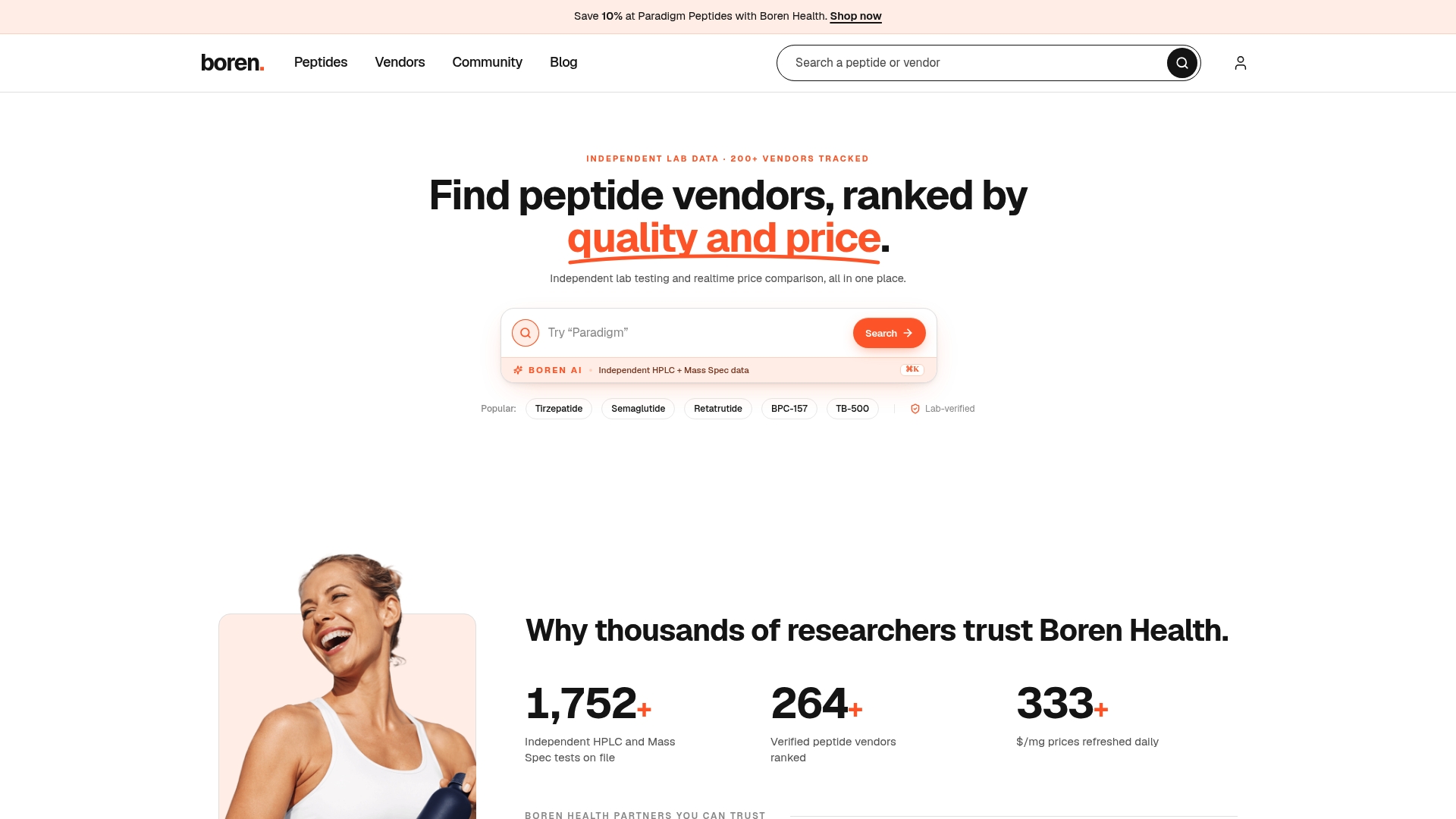
What this gives you in practice:
- Lab-verified purity data on peptides and related diluents, updated as new samples are tested.
- Price comparisons across vendors updated regularly so quality and cost can be considered together.
- Vendor plans designed to support product testing and listing.
| What you get | Why it matters |
|---|---|
| Independent HPLC/mass spec results | Provides information on product content and quality |
| Published failures alongside passes | Offers insight into vendor testing outcomes |
| Price updates | Allows assessment of cost relative to quality |
Before you restock bacteriostatic water or any peptide supply, check our research goal pages to see how your current or prospective vendor has tested.
This article is general information, not a substitute for advice from a qualified doctor. Consult a qualified healthcare professional about your own circumstances before acting on anything here.
FAQ
How can you tell if bacteriostatic water has gone bad?
Visible clouding, particulates, discoloration, or an unusual odor are all signs to discard a vial immediately. Clarity alone is not reliable, since microbial contamination can be present without any visible change, so a vial past its beyond use date should be discarded even if it looks fine.
What happens if you use bacteriostatic water that is past its date?
A single small exposure in a healthy adult is typically low risk, but the solution may have reduced preservative effectiveness or microbial contamination that increases risk with repeated use. Anyone who used an expired vial on a neonate, infant, or in a research setting should document the lot number and dates and contact a clinician or the relevant safety office.
What happens if bacteriostatic water is accidentally injected?
A small accidental injection in a healthy adult is generally considered low risk, though any injection error should be documented with the product, lot number, and amount involved. Neonates and infants carry a higher risk due to benzyl alcohol sensitivity, so any exposure in that population should prompt immediate medical contact.
How long does an opened vial of bacteriostatic water last?
Absent specific manufacturer instructions, the common in-use beyond use date is 28 days after the vial is first punctured, a default described in guidance on beyond-use dating from Wayne University. This 28 day window can never extend past the original printed expiration date on the unopened vial.